
Sixty Years of the NFL’s “Common” Draft
Historic draft bookends from Michigan State in 1967 to Notre Dame in 2025

 Photo courtesy of Michigan State University
The war between the American Football League and National Football League was getting expensive.
Before 1960, the NFL controlled the destiny of all college players. Franchises drafted them and then paid them what the team deemed their value to be. There was little room for negotiation. But when the AFL arrived on the scene in 1960, the NFL suddenly had to compete financially for those players – and some of them were choosing AFL money over NFL stability.
Three of the NFL’s 12 first-rounders in 1960 — Billy Cannon, Johnny Robinson and Ron Mix – signed with the AFL. Future NFL first-rounders Lance Alworth, John Hadl, Ken Rice, Jim Dunaway, Ed Budde, Dave Behrman and Steve DeLong also cast their lots with the new league.
But the AFL hit the NFL with a real haymaker in 1965 by signing Alabama quarterback Joe Namath to a three-year, $427,000 contract – the richest in pro football history. That put the game’s flashiest player in the league’s flashiest market – New York City. The NFL knew at that point it needed to thwart the AFL challenge and slow the escalation of player costs. Within a year, the two leagues agreed to a merger.
As part of the agreement, there would be one “common” draft of college players by the two leagues, starting in 1967. No more bidding on players. You draft them, you own them. The 60th anniversary of the common draft comes in 2026. Here’s a look back at some nuggets from each of the first 59 years of the that draft:
1967
The 1967 draft was historical for two reasons. First, it began the “common” draft era. Secondly, Michigan State produced four of the first eight selections: DT Bubba Smith to Baltimore with the first pick, RB Clint Jones to Minnesota with the second pick, OLB George Webster to Houston with the fifth selection and WR Gene Washington also to Minnesota with the eighth choice. In the 58 NFL drafts since then, no other school has ever produced as many as four players in the Top 10 selections, much less the Top 8.
1968
There were only 27 teams drafting in 1968 – but a record 10 of them selected offensive lineman, including four in the Top 10. The Minnesota Vikings started the parade by choosing Southern Cal tackle Ron Yary with the first overall pick, then the Cincinnati Bengals grabbed center Bob Johnson at 2. The San Diego Chargers took tackle Russ Washington with the fourth pick and Southern Cal’s other tackle, Mike Taylor, went to the Pittsburgh Steelers at 10. San Francisco took Auburn center Forrest Blue at 15 and the Kansas City Chiefs then claimed two guards, Mo Moorman of Texas A&M at 19 and George Daney of Texas-El Paso at 22. The Baltimore Colts drafted Minnesota tackle John Williams at 23, the Green Bay Packers took Arizona guard Bill Lueck at 26 and the Miami Dolphins closed the round by selecting Indiana tackle Doug Crusan at 27. Yary is now in the Hall of Fame, Johnson and Washington became AFL all-stars and Blue an NFL Pro Bowler.
1969
Notre Dame tied Michigan State, 10-10, in 1966 in the original “Game of the Century.” The Irish went on to win the national championship that season with a 9-0-1 record and one of the most talented rosters in college football history. Over the next three drafts, the NFL selected 19 of Notre Dame’s 22 starters from that 1966 game plus eight players who suited up as reserves. Guards Paul Seiler and Tom Regner and DT Alan Page were selected in the first round of the 1967 draft, DE Kevin Hardy in the first round of the 1968 draft and OT George Kunz and WR Jim Seymour the first round in 1969.
1970
Don Shula was a defensive guru. He built an elite unit in Detroit as defensive coordinator of the Lions in the early 1960s and another elite unit in Baltimore as head coach of the Colts at the end of the decade. In Shula’s first year as head coach of the Miami Dolphins in 1970, he started building his next elite defense. The Dolphins selected Purdue CB Tim Foley in the third round of the 1970 draft, Toledo CB Curtis Johnson in the fourth round, Georgia safety Jake Scott in the seventh round and Auburn LB Mike Kolen in the 12th round. All became starters by their second seasons in 1971 when the Dolphins won an AFC championship. Miami lost the Super Bowl that season to Dallas, whose coach Tom Landry dubbed the Dolphins’ defense the “No Names.” That No Name unit allowed the fewest yards and points in the league in 1972 on the way to the only perfect season in NFL history at 17-0. The Dolphins again allowed the fewest points in the NFL in 1973 in repeating as Super Bowl champions. Scott started all 126 of his career games in the NFL, intercepted 49 passes and went to five Pro Bowls. Johnson started 113 games for the Dolphins over his nine seasons, Foley started 110 over 11 seasons and Kolen 78 over his seven seasons. Shula, by the way, became the winningest coach in NFL history.
1971
For the first time in draft history, quarterbacks were selected with each of the top three picks – underscoring the premium the NFL was now placing on the position. You need a franchise quarterback to compete for championships. Before the Manning brothers were winning Super Bowls, there was Archie Manning, the patriarch of the quarterback dynasty. He finished third in the Heisman Trophy voting in 1970 behind Jim Plunkett and Joe Theismann but improved his standing in the 1971 NFL draft when he went second to Plunkett. Dan Pastorini was chosen third overall in that draft. Archie was more athletic than either Peyton or Eli — and he needed to be. He was drafted by the lowly New Orleans Saints and spent the first 10 seasons running for his life behind invisible pass protection. Archie even missed a season with a shoulder injury. The Saints never gave him the supporting cast that the Colts gave Peyton or the Giants gave Eli. Archie was sacked 396 times in his 13 seasons before retiring with a 35-101-3 career record.
1972
When Buffalo drafted Michigan guard Reggie McKenzie with the 27th overall pick in the first round of the 1972 draft, the Bills began assembling the “Electric Company” – the offensive line that rescued O.J. Simpson’s career and sent him to the Hall of Fame. Simpson was hardly his Heisman Trophy-winning self in his first three years with the Bills, never rushing for more than 800 yards or five touchdowns in a single season. But his blocking received a marked upgrade in 1972 when the Bills drafted McKenzie and acquired left tackle Dave Foley on waivers from the New York Jets. Simpson rushed for a league-leading 1,251 yards on his way to his first Pro Bowl that season. The Bills followed that up by drafting Michigan tight end Paul Seymour and Michigan State guard Joe DeLamielleure both in the first round in 1973 and also acquired center Mike Montler in a trade with New England. Along with holdover right tackle Donnie Green, the Electric Company was now complete – and it turned on the juice. Simpson became the first back in NFL history to rush for 2,000 yards in a single season in 1973 – the second of his five consecutive 1,000-yard seasons that produced four NFL rushing titles. DeLamielleure went to six Pro Bowls and joined Simpson in the Hall of Fame. Foley was the only other member of the Electric Company invited to a Pro Bowl (1973).
1973
There’s a coaching adage that special teams are a third of the game. But that’s lip service. Teams focus their resources on building their offense and defense with the kicking game an afterthought. But not for the Raiders. Whether they play in Oakland, Los Angeles or Las Vegas, special teams matter. Under their Hall-of-Fame owner and personnel guru Al Davis, the Raiders became the only team in NFL history to use a first-round draft pick on both a punter and a placekicker. The Raiders claimed Southern Miss punter Ray Guy with the 23rd overall pick of the 1973 draft, then selected Florida State placekicker Sebastian Janikowski with the 17th pick of the 2000 draft. Guy is the only pure punter ever drafted in the first round and Janikowski one of only four pure placekickers to go that high. Guy is in the Hall of Fame and Janikowski played 18 seasons and scored 1,913 points, including 58 field goals of 50 yards or more.
1974
The Pittsburgh Steelers conducted what is considered the greatest draft in NFL history in 1974. The Steelers selected four Hall of Famers in the first five rounds: WR Lynn Swann in the first round, MLB Jack Lambert in the second, WR John Stallworth in the fourth and center Mike Webster in the fifth. Pittsburgh signed a fifth Hall of Famer, safety Donnie Shell, as an undrafted college free agent that year. That group became the backbone of a team that won four Super Bowls in a span of six seasons (1974-79). Safety Jimmy Allen and DT Charles Davis also won Super Bowl rings from that draft class.
1975
The Dallas Cowboys followed up that great Pittsburgh draft with a foundation draft of their own in 1975. It was dubbed the “Dirty Dozen” because 11 of the draft picks and one undrafted college free agent made the team that season. The Cowboys selected Hall-of-Fame DT Randy White and OLB Thomas “Hollywood” Henderson in the first round, guard Burton Lawless in the second, OLB Bob Breunig in the third, OT Pat Donovan and safety Randy Hughes in the fourth, center Kyle Davis in the fifth, CB Rolly Woolsey in the sixth, punter Mitch Hoopes in the eighth, guard Herbert Scott in the 13th, RB Scott Laidlaw in the 14th and then signed WR Percy Howard as a free agent. That youth helped propel the Cowboys to the Super Bowl that season. Lawless was the only rookie starter in that game, a loss to Pittsburgh. But two years later when the Cowboys won a Super Bowl against Denver, Scott, Donovan, White, Henderson and Breunig were all starting. Breunig, Donovan and Scott joined White at Pro Bowls.
1976
The NFL awarded Seattle and Tampa expansion franchises for the 1976 season and gave them what the league hoped would be a jump start toward competitiveness. The NFL assigned the Seahawks and Buccaneers the first two selections in each of the 17 rounds of the draft. Tampa Bay won the coin toss for the first overall choice and the two teams rotated the top pick in every round thereafter. Unfortunately, the two teams were handcuffed by one of the worst drafts in history. There were 487 players selected in the 17 rounds – but only five earned busts in the Hall of Fame and only 14 others went to Pro Bowls. The Buccaneers drafted one of the Hall of Famers – DE Lee Roy Selmon with that first overall choice. Tampa Bay made 20 selections in the draft and found only one other Pro Bowler, return specialist Carl Roaches in the 14th round. The Seahawks drafted 25 players but didn’t find a single Pro Bowler in their class. Seattle selected Notre Dame DT Steve Niehaus with the second pick of the first round. He played only three seasons with the Seahawks and collected 10 ½ sacks. Seattle did catch a break, however, when the Seahawks traded a future eighth-round draft pick to Houston that summer for a wide receiver the Oilers were going to cut – Steve Largent, who became one of the five players from the 1976 draft class enshrined in Canton. He played 14 seasons with the Seahawks, catching 819 passes for 13,089 yards and 100 touchdowns.
1977
The NFL Players Association negotiated a reduction in the NFL draft from 17 rounds to 12 in 1977, giving more undrafted players the freedom to choose a situation that offered them the best opportunity and the best money. Colgate safety Mark Murphy chose to sign with the Washington Redskins and enjoyed an eight-year NFL career. He won a Super Bowl ring with the Redskins and went to the Pro Bowl in 1983 when he led the league in interceptions. He was named one of the 90 Greatest Redskins in 2022 and now serves as president emeritus of the Green Bay Packers. Another undrafted free agent who had his choice of teams in 1977 was Tony Dungy, who signed with the Pittsburgh Steelers. A college quarterback at Minnesota, Dungy converted to safety and led the Steelers with six interceptions in 1978, helping them win their third Super Bowl of the decade. Dungy is now in the Hall of Fame as a coach.
1978
There were 334 players, including 14 quarterbacks, selected in the 1978 draft. But what’s notable is who wasn’t selected – Warren Moon. He started his final two college seasons at Washington and led the Huskies to a Rose Bowl upset of Michigan 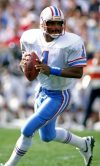 in his last game. But African-American quarterbacks had not established themselves in the NFL at that point and the league was reluctant to draft them. Only James Harris, an eighth-round selection by Buffalo in 1969, had any success, starting the final nine games of 1974 for the Los Angeles Rams and earning his lone Pro Bowl berth. Despite passing for 11 touchdowns and rushing for six more as a senior, the NFL showed little interest in Moon. Sensing that indifference, he signed with the Canadian Football League before the NFL draft. The NFL went on to draft quarterbacks from Lehigh, Northern Colorado, Santa Clara and Utah State – but not the MVP of the Rose Bowl. Moon spent six seasons in Canada with the Edmonton Eskimos, winning five Grey Cups. He was the CFL MVP in his final season in 1983. The Houston Oilers signed Moon in 1984 and he played 17 seasons in the NFL, earning Pro Bowl honors in nine of them. He is the only player enshrined in both the Pro Football and Canadian Football Halls of Fame.
1979
Kirk Gibson was the best receiver in college football in 1978 and sat atop NFL draft boards at his position in 1979. At 6-3, 215 pounds with 4.29 speed, Gibson had “elite” scribbled all over his scouting report. He averaged a staggering 21 yards per career catch at Michigan State, leaving East Lansing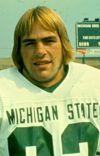 with school records for catches, yards and touchdowns. In a bid to gain leverage with his future football negotiations, Gibson decided to play baseball at Michigan State as a junior in 1978. He hit .390 in his only season with 16 home runs, 52 RBI and 16 stolen bases. That earned him All-America honors in the sport. Then Gibson used his football leverage. If he was to play baseball, he wanted it to be with his hometown Detroit Tigers and told MLB teams if they drafted him in 1978, he would continue his football career at Michigan State. The ploy worked – Gibson slid to the 12th overall pick of the first round where the Tigers claimed him. Gibson signed with Detroit with the provision that he be allowed to return to Michigan State to play his final season of football that fall. He then caught 42 passes for 806 yards and seven touchdowns to earn All-America honors in a second sport. Even though he was signed to play baseball, the St. Louis football Cardinals drafted Gibson in the seventh round in 1979 to secure his future rights. But the Cardinals would never have the chance to exercise them. Gibson played 17 seasons in the big leagues and hit two of the most dramatic home runs in World Series history — in 1984 with the Tigers and 1988 with the Dodgers. He was the National League MVP in 1988 and the Manager of the Year with the Arizona Diamondbacks in 2011. Gibson has been enshrined in the College Football Hall of Fame.
1980
When George Allen coached the Washington Redskins in the 1970s, he was not a fan of the draft. He was in a hurry to win – and the path was quicker with veterans than with rookies. So Allen, in his dual capacity as general manager, annually traded away draft picks for experienced players. The Redskins once went 11 consecutive drafts without a first-round draft pick, from 1969-79. But Allen left the Redskins after the 1977 season and Bobby Beathard took over as Washington’s general manager. When Beathard finally got the chance to make a first-round selection for the Redskins in 1980, he didn’t let it go to waste. Beathard chose Syracuse WR Art Monk with the 18th pick of the first round. Now Monk, Beathard and Allen are all in the Hall of Fame.
1981
There have been a series of college all-star games over time – the Senior Bowl, East-West Shrine, Hula Bowl, Blue-Gray – giving graduating seniors a chance to display their wares before the watchful eyes of NFL talent evaluators. A player could improve his draft stock with a positive showing in those games. Howie Long was proof of that. He was an honorable mention All-America defensive lineman at Villanova as a senior with his four sacks and 84 tackles. But his caliber of competition at the Division I-A level was a concern and he was not invited to any college all-star games. An injury the week of the Blue-Gray game, however, opened the door for Long as a last-minute addition to the Blue team. Competing against players from the power conferences, Long blocked a punt and was named the game’s MVP. “That game changed everything,” Long said. Indeed. He rocketed up the draft board and was selected by the Oakland Raiders in the second round with the 48th overall choice of the 1981 draft. Long played 13 seasons, collected 92 sacks, went to eight Pro Bowls and now has a bust in the Hall of Fame.
1982
The Dallas Cowboys dabbled with basketball conversions, signing Cornell Green (Utah State, 1962), Pete Gent (Michigan State, 1964) and Percy Howard (Austin Peay, 1975) as undrafted free agents off college courts. Green went to five Pro Bowls, Howard scored a touchdown in a Super Bowl and Gent caught 68 passes over five seasons (and also wrote North Dallas Forty). But the first team to invest a draft pick in a basketball player and successfully convert him into a football player was the Seattle Seahawks, who claimed Sam Clancy in the 11th round in 1982. Clancy never played a down of college football but started four seasons for the Pitt basketball team and remains the only player in school history with 1,000 points and 1,000 rebounds. The Seahawks made him a defensive end and Clancy played 10 seasons, starting 47 games and collecting 30 sacks. He also notched 16 sacks in his only USFL season playing for his hometown Pittsburgh Maulers in 1984. Marcus Pollard, Tony Gonzalez, Julius Peppers, Antonio Gates and Jimmy Graham have been players since Clancy who excelled on both college basketball courts and NFL playing fields.
1983
The 1983 draft was considered the greatest in NFL history with nine Hall of Famers and 31 other players who went to Pro Bowls. It is often dubbed the “quarterback draft” because there were six players at that position selected in the first round and three of them now have busts in Canton: John Elway (first overall to Baltimore), Jim Kelly (14th to Buffalo) and Dan Marino (27th to Miami). Todd Blackledge (7th, Kansas City), Tony Eason (15th, New England) and Ken O’Brien (24th, NY Jets) were the other quarterbacks taken in the first round. The other Hall of Famers from that draft were RB Eric Dickerson (first round, LA Rams), OT Jim Covert (first, Chicago), OL Bruce Matthews (first, Houston), CB Darrell Green (first, Washington), RB Roger Craig (second round, San Francisco) and DE Richard Dent (eighth round, Chicago).
1984
The Minnesota Vikings selected Washington State DT Keith Millard with the 13th overall pick of the 1984 draft but lost him to the USFL. He was one of four USFL players chosen by NFL teams in the common draft. The Buffalo Bills selected QB Jim Kelly in the first round and the Miami Dolphins took WR Anthony Carter in the 11th round, both in 1983, and the Los Angeles Rams drafted QB Doug Flutie in the 11th round in 1985. Carter and Flutie had already signed USFL deals before being drafted by NFL teams, Carter with the Michigan Panthers and Flutie the New Jersey Generals. Coming from the University of Miami, Kelly preferred a warmer climate than what Buffalo offered so he signed with the USFL Houston Gamblers. Millard expected to sign with Minnesota but felt the Vikings were not offering market value for his draft standing so he snubbed the NFL and signed with the Jacksonville Bulls. Millard collected 12 sacks in his one USFL season, then joined the Vikings in 1986 after the USFL folded. He played eight years in the NFL, went to two Pro Bowls and was voted the league’s Defensive Player of the Year in 1989 when he posted 18 sacks.
1985
Caliber of competition has always been a sticky topic in NFL draft rooms. Is a 1,000-yard rushing season at Jackson State the same as a 1,000-yard rushing season at Southern Cal? Are 15 receiving touchdowns at Grambling the same as they are at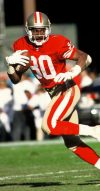 Ohio State? Such was the discussion of Jerry Rice in the 1985 draft. He set NCAA Division I-AA records at Mississippi Valley State with his 112 catches, 1,845 yards and 27 touchdowns as a senior in 1984. But would he produce the same numbers against cornerbacks from Alabama and LSU that he did against corners from Alcorn State and Southern? His 4.6 times in the 40-yard dash further called his statistics into question. The New York Jets went big school at wide receiver with the 10th overall selection of the 1985 draft, claiming Al Toon of Wisconsin, as did Cincinnati with the 13th pick, choosing Eddie Brown of Miami. After the Kansas City Chiefs drafted North Carolina RB Ethan Horton with the 15th selection of the first round, the defending Super Bowl champion San Francisco 49ers traded up 12 spots for the 16th overall pick to grab Rice. He spent the next 20 seasons making a case for himself as the greatest player in NFL history. He went to 13 Pro Bowls and was a two-time all-decade selection, catching an NFL-record 1,549 passes for 22,895 yards and touchdowns. His college statistics were indeed legit. He also owns three Super Bowl rings.
1986
Speaking of San Francisco, the 49ers won two Super Bowls in the first half of the 1980 decade. Their 1986 draft, despite the lack of a first-round pick, gave them the legs to win two more Lombardi Trophies by decade’s end. Eight of their 1986 draft picks became starters on San Francisco teams that won back-to-back Super Bowls in 1988-89: DE Larry Roberts (second round), FB Tom Rathman, CB Tim McKyer and WR John Taylor (all third round), OLB Charles Haley, OT Steve Wallace and DE Kevin Fagan (all fourths) and CB Don Griffin (sixth). Haley became a Hall of Famer and Taylor and Wallace joined him as Pro Bowlers.
1987
The Tampa Bay Buccaneers held the first overall pick of the 1986 draft and their selection was a no-brainer – Heisman Trophy winner Bo Jackson of Auburn. He rushed for an NCAA-leading 1,786 yards and 17 touchdowns as a senior, leaving college with an average of 6.6 yards per carry. But there  was one problem – Bo did not want to play his football for the Buccaneers. Like Kirk Gibson before him, Jackson had a baseball option, having already been drafted out of high school by the New York Yankees. In his one full season of baseball at Auburn, he hit .401 with 17 home runs. The Kansas City Royals selected Jackson in the fourth round of the 1986 MLB draft to secure his rights in the sport. But Jackson signed with the Royals and spent that summer in the minors before a September call-up. He hit a pair of home runs in Kansas City and then broke spring training in 1987 with the parent club, slugging a franchise rookie-record 22 homers that season. By not signing Jackson within a year of his draft selection, the Buccaneers relinquished his rights – and the Raiders picked Jackson in the seventh round in 1987 to secure those rights. Jackson signed with the Raiders in 1988 and played both sports for four years. But a hip injury in the 1991 NFL playoffs ended his football career and damaged his baseball career, limiting him to 183 games over the next four seasons before his retirement. Jackson went to the MLB All-Star Game in 1989 and was voted to the NFL Pro Bowl in 1990. He hit 141 home runs and stole 82 bases in baseball and also rushed for eight 100-yard games and 16 touchdowns in his 38-game NFL career.
1988
The second has always been my favorite round of any NFL draft. In the first round, teams are afraid to make mistakes so they look for players who fit the prototypes and have all the measurables to succeed. But in the second round, teams let down their guard a bit and draft the best “football” players regardless of size, speed, medical concerns and caliber of competition. Which explains why Hall of Famers Mike Singletary (too short), Jack Lambert (too skinny), Howie Long (caliber of competition) and Curtis Martin (injury risk) all became second-round draft picks over the years. Thurman Thomas suffered a knee injury in college so he carried a medical flag into the 1988 draft. The Buffalo Bills selected him with the 40th overall choice and he went on to become the NFL MVP in 1991. He was one of three Hall of Famers drafted in the second round in 1988 along with CB Eric Allen and center Dermontti Dawson. They were joined at Pro Bowls during their careers by eight other players selected in the second round that year: RB Ickey Woods, WR Brian Blades, OT John Elliott, DTs Pierce Holt and Michael Dean Perry, LBs Chris Spielman and Ken Norton and kicker Chip Lohmiller.
1989
After rushing for 2,628 yards and 37 touchdowns on his way to the Heisman Trophy as a junior at Oklahoma State in 1988,  Barry Sanders had little else to prove in the college game. As an underclassman, though, he was ineligible for the NFL draft. But since Oklahoma State had been placed on probation that year, NFL commissioner Pete Rozelle allowed Sanders entry into the 1989 draft. He became the third overall choice by the Detroit Lions. He strung together 10 consecutive 1,000-yard rushing seasons, winning four NFL rushing titles, before retiring in 1999. The NFL change its eligibility rules in 1990, allowing underclassmen to apply for early admission to the draft. Quarterback Jeff George became the first junior chosen first overall in that draft. There have been 24 underclassmen since then go first overall. Sanders is one of nine underclassmen who have been enshrined in the Hall of Fame.
1990
Jimmy Johnson inherited the worst team in the NFL when he replaced Tom Landry as coach of the Cowboys in 1989. And it would get worse – by choice. After finishing 3-13 under Landry in 1988, Johnson decided he needed to accelerate the rebuilding process. So in October, after an 0-6 start, he traded away his best player – Herschel Walker – to the Minnesota Vikings. In return, the Cowboys received five players and eight draft picks –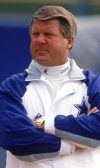 three first rounders, three seconds, a third and a sixth. Johnson had a decided edge at the draft table because he had just come from the University of Miami where he not only knew the best college players but in many cases recruited them. When all the drafting was done, Johnson’s wheeling and dealing netted RB Emmitt Smith, DT Russell Maryland, safety Darren Woodson and CB Kevin Smith plus former Hurricanes Alonzo Highsmith and Daniel Stubbs in trades. Those players helped Johnson engineer a stunning transformation that made the Cowboys the NFL’s Team of the Decade for the 1990s. Dallas went from worst team in the league (1-15 in 1989) to Super Bowl champions in a span of four years – and the Cowboys then became the first team in NFL history to win three Lombardi Trophies in a span of four seasons. Smith arrived in Dallas on the 17th pick of the 1990 draft and became the NFL’s all-time leading rusher. Johnson has joined Smith in the Hall of Fame.
1991
The Canadian Football League had never been serious competition for the NFL. American collegians usually headed north to Canada after NFL opportunities failed to materialize. But there have been a few players who decided either the money or the opportunity was better in the 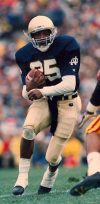 CFL, most notably Raghib “Rocket” Ismail. He was an All-America wide receiver and return specialist from Notre Dame who was projected as the first overall pick of the 1991 NFL draft to the Dallas Cowboys. But on the eve of the draft, the Toronto Argonauts offered Ismail the largest football contract ever in any league — $18.2 million over four years. And he accepted. The Raiders wound up selecting Ismail in the fourth round that draft just to secure his future negotiating rights. After two seasons in Canada and a Grey Cup championship, Ismail returned stateside to sign with the Raiders. He spent nine years in the NFL and did wind up playing for the Cowboys his final three seasons. He caught 363 passes and scored 30 TDs in his NFL career. Three other notable draft picks who spurned the NFL for Canada were Notre Dame QB Joe Theismann in 1971, Nebraska Heisman Trophy winner Johnny Rodgers in 1973 and Ohio State LB Tom Cousineau, the first overall pick of the 1979 draft by Buffalo. Theismann and Rodgers left for better opportunities and Cousineau for more money. Like Ismail, all wound up returning to the NFL.
1992
The 1992 draft is considered the worst in NFL history. It was only the third draft in history that failed to produce a single Hall of Famer, joining those of 1943 and 1984. The Indianapolis Colts had the first two overall picks and selected Washington DE Steve Emtman and Texas A&M LB Quentin Coryett. Neither went to a Pro Bowl. In fact, there were only 27 Pro Bowlers among the 336 selections. There were 19 quarterbacks taken in the 12 rounds and they combined for a mere three Pro Bowl appearances, two by ninth-rounder Brad Johnson and one by sixth-rounder Jeff Blake. There were some quality performers in the draft: Jimmy Smith became the all-time leading receiver of the Jacksonville Jaguars, safety Darren Woodson won three Super Bowl rings with the Dallas Cowboys and kicker Jason Hanson ranks fourth on the all-time scoring list with 2,150 points. But overall, this draft was a disaster.
1993
The NFL Players Association negotiated another major reduction in the draft from 12 rounds to eight in 1993, then down again to seven rounds in 1994. Again, that gave more undrafted players the freedom to select a team that offered them the best opportunity and best money. Safety Robert Griffith (Minnesota) and center Robbie Tobeck (Atlanta) signed with teams in 1993 that gave them the opportunity not only to one day start in the NFL but also to become NFL Pro Bowlers.
1994
Charlie Ward was the best player in college football in 1993. He passed for 3,032 yards and 27 touchdowns with only four interceptions, leading Florida State to its first-ever national championship. Ward won both the Heisman Trophy and the Sullivan Award as America’s top amateur athlete that year. Logically, quarterbacks with his resume would zoom up NFL draft boards. Ward also played basketball all four of his years at Florida State and set a school record with his 236 career steals. But at 6-2, Ward didn’t fit the NFL prototype for the quarterback position. The NFL was still hunting the Troy Aikmans, Jeff Georges, Drew Bledsoes and Todd Marinoviches at the position, all of whom stood 6-4 or taller. So Ward had a sporting option and decided to use it, telling the NFL if he wasn’t a first-round draft pick he would play basketball. Two quarterbacks were taken in the Top 10, Heath Shuler and Trent Dilfer, and it appeared the only team left with an interest in Ward was Minnesota with back-to-back picks at 18-19. But coach Denny Green claimed North Carolina State CB Dewayne Washington and Cal OT Todd Steussie with those choices. So Ward slid out of the first round and into the NBA, where he was drafted with the 26th overall pick of the first round by the New York Knicks. A point guard, Ward played 11 seasons in the NBA, collecting 2,539 assists and 776 steals. It turns out Ward arrived on the scene about a decade too soon for the NFL. Smaller quarterbacks like Michael Vick (6-0), Drew Brees (6-0), Russell Wilson (5-11) and Patrick Mahomes (6-2) have all since been drafted and flourished. Ward is now the head basketball coach at Florida A&M.
1995
The expansion Jacksonville Jaguars chose OT Tony Boselli with the first draft selection in franchise history, the second overall pick in 1995. He was a three-time first-team All-Pac 10 at Southern Cal, a two-time All-America and winner of the 1994 Morris Award as the best blocker in the conference. Boselli proved worthy of his lofty NFL draft standing despite a shoulder injury that ended his career after seven seasons. He was selected first-team all-pro at left tackle three times, went to five Pro Bowls and was named to the 1990s NFL all-decade team. In 2022, Boselli was inducted into the Hall of Fame – pushing Southern Cal’s record count to 14 players in Canton. Those who proceeded him were Marcus Allen, Red Badgro, Frank Gifford, Ronnie Lott, Bruce Matthews, Ron Mix, Anthony Munoz, Troy Polamalu, Junior Seau, O.J. Simpson, Lynn Swann, Willie Wood and Ron Yary. Like Boselli, Mix, Munoz and Yary were offensive tackles.
1996
The Cleveland Browns left for Baltimore in 1996 to become the Ravens. Owner Art Modell was starting over there with a new head coach (Ted Marchibroda) and a new personnel director (Ozzie Newsome). The Ravens had two first-round picks in 1996 and Newsome delivered two Hall of Famers, OT Jonathan Ogden and LB Ray Lewis. It was a sign of things to come with Newsome calling the shots. It always amazed me that no matter where the Ravens were drafting in the first round, a good player always seemed to slide to them. Starting with Lewis, whom Newsome claimed with the 26th overall selection. He was named to the NFL’s Centennial Team as one of the 100 best players in history. Then came TE Todd Heap with the 31st pick of the 2001 draft, safety Ed Reed with the 24th pick of 2002, guard Ben Grubbs with the 29th pick of 2007, OT Michael Oher with the 23rd pick of 2009 and QB Lamar Jackson with the 32nd pick of 2018, Newsome’s final draft. Reed joined Lewis and Ogden on the NFL’s Centennial Team and also the Hall of Fame. Heap and Grubbs went to two Pro Bowls apiece and Jackson has twice been named the NFL’s MVP. Oher started the first 80 games of his career and 110 over his eight seasons. All except Jackson started on Super Bowl championship teams for the Ravens.
1997
For only the second time in NFL history, an offensive tackle was selected first overall when the St. Louis Rams claimed Orlando Pace out of Ohio State. When NFL teams shop for offensive linemen, the Big Ten is always a mandatory scouting stop. That’s because the Big Ten has three of the Top 6 producers of offensive linemen in NFL history. Ohio State ranks second with 131, Michigan fifth with 106 and Wisconsin sixth with 98. Notre Dame has produced the most with 158. Michigan sent three blockers to the Hall of Fame (OT Dan Dierdorf and guards Tom Mack and Steve Hutchinson). Three other Big Ten schools have produced two Hall of Famers: Nebraska (OT Bob Brown and guard Will Shields), Ohio State (OTs Jim Parker and Pace) and Wisconsin (center Mike Webster and OT Joe Thomas).
1998
There were two quarterbacks who sat high atop draft boards in 1998, Peyton Manning and Ryan Leaf. Opinions were divided 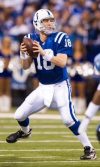 evenly on the two and the first overall pick appeared to be a toss-up. After four years at Tennessee and 1,381 college passes, Manning was viewed as the better pick in the short term. He could step in and play right away. But Leaf, who was skipping his senior year after throwing just 845 college passes, was viewed as the better long-term choice with the bigger upside. At 6-5, 261 pounds and with a cannon for an arm, Leaf was viewed as a John Elway starter kit. The Indianapolis Colts owned the first pick and chose Manning, allowing the San Diego Chargers to claim Leaf second overall. The Colts were right. It turned out Manning had the better short- and long-term future. He played 17 seasons, winning five MVP awards, three passing titles and two Super Bowls. He is now in the Hall of Fame. There was no “long term” for Leaf. He washed out after three seasons, leaving the NFL with a 4-17 career record.
1999
Not too long ago, the draft was a two-day affair. The first three rounds were conducted in Day 1, then the final four rounds in Day 2. Frankly, everyone should have a productive Day 1. That’s when the premium picks are made and the players are regarded as known commodities. But the second day is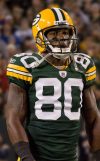 what can make a good draft great. Talent evaluators have to dig a little bit deeper in those rounds for the gems. There was no better second-day drafter on the planet than Ron Wolf, the Hall-of-Fame general manager of the Green Bay Packers. He selected WR Donald Driver in the seventh round of the 1999 draft out of Alcorn State. Fourteen seasons later, Driver retired as the all-time leading receiver in Packer history with 743 catches, 10,137 yards and 61 touchdowns. Driver was one of six second-day draft picks by Wolf to go to Pro Bowls. He drafted three other players who went to Pro Bowls with other teams. In all, he drafted 19 traditional “second day” players who would start games for the Packers. He even maximized draft picks that didn’t become starters. Even though Wolf had Brett Favre, he drafted quarterbacks regularly in the second day: Ty Detmer (ninth round), Mark Brunell (fifth), Matt Hasselbeck (sixth) and Aaron Brooks (fourth). They never started games for the Packers but after developing them, Wolf traded them away for five draft picks – a first, three thirds and a fifth. Not a bad return on his investment.
2000
No one saw Tom Brady coming. Not the University Michigan and certainly not the New England Patriots. It took Brady three years to win the starting quarterback spot in college and his career stats were pedestrian – 4,773 passing yards with 30 touchdowns and 17 interceptions. His 5.28 time in the 40-yard dash at the NFL scouting combine dropped him further down draft boards. There were six quarterbacks chosen ahead of Brady in 2000 before New England finally claimed him with the 199th overall selection, a compensatory pick in the sixth round. But only after the Patriots selected safety Antwan Harris earlier in that same round. Imagine that – New England felt better about Antwan Harris that day than the Patriots did about Tom Brady. Well, the six quarterbacks drafted before Brady combined to pass for 44,470 career yards and 246 touchdowns. Brady passed for 89,214 yards and 649 touchdowns in a career the produced seven Lombardi Trophies, two all-decade selections and three NFL MVP awards. He retired as the league’s all-time leading passer.
2001
The San Diego Chargers owned the first overall pick of the 2001 NFL draft and, with an underachieving Ryan Leaf and an 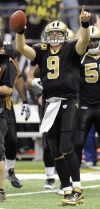 aging Jim Harbaugh on the roster, were in dire need of a quarterback. The Chargers were looking at Virginia Tech’s Michael Vick – as was everyone else in the NFL. But coming off a 1-15 season, the Chargers were in need of quantity as much as quality. So San Diego traded away that first pick to the Atlanta for return specialist Tim Dwight and three draft choices – a first and third in 2001 and a second in 2002. The first-rounder from Atlanta was the fifth overall selection and the Chargers used it on TCU RB LaDainian Tomlinson. Still in need of a quarterback, the Chargers drafted one at the top of the second round – Purdue’s Drew Brees. By trading away the right to select Vick, the Chargers wound up drafting two future Hall of Famers. Tomlinson rushed for 13,684 yards, which ranks seventh all-time. Brees passed for 80,358 yards and 571 touchdowns, which both rank second all-time to Tom Brady.
2002
During the 2000 decade, seventh-round picks made opening-day rosters only 45.8 percent of the time. The last round of a draft is when teams usually take flyers on special-teamers and developmental projects. The seventh round doesn’t make or break anyone’s draft. But let’s take a look at an eight-pick snap shot of that round toward the end of the 2002 draft, picks 238 through 245. All eight made their drafting teams: 238, DT Raheem Brock, 10 seasons, 104 starts, Super Bowl ring with the Colts; 239, guard Eric Heitmann, eight seasons, 114 starts for the 49ers; 240, DE Carlos Hall, 4 seasons, 33 starts for Tennessee; 241, RB Leonard Henry, one season, two starts for Miami; 242, DE Brett Kiesel, 12 seasons, 114 starts, two Super Bowl rings with the Steelers; 243, long snapper Chris Massey, 10 seasons, 141 games; 244, WR David Givens, five seasons, 32 starts with touchdown catches in back-to-back New England Super Bowl victories in 2004-05; 245, OT, Kevin Shaffer, nine seasons, 93 starts. That type of productivity is acceptable in any round of any draft.
2003
The Pittsburgh Steelers are considered one of the NFL’s most conservative teams on draft day. They prefer to hold onto their own picks and draft off 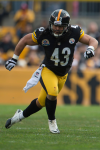 their board when they go on the clock, especially in their first round. But 2003 was an exception. Coming off a 10-5-1 season and an AFC North title, the Steelers were slotted to pick 27th in the first round. But this is a franchise that loves defense and there was a talented player on that side of the ball that was sliding. Safeties historically have been undervalued because they had not been considered the impact position of an edge rusher or a cornerback. As talented as Ed Reed was at safety at the University of Miami, he slid to the 24th overall pick by the Baltimore Ravens a year earlier. But the Steelers traded up 11 spots in 2003 and claimed Troy Polamalu of Southern Cal with the 16th overall selection. He played 12 seasons, collecting eight Pro Bowl invitations and two Super Bowl rings. He was the 2010 NFL Defensive Player of the Year and now has a bust in Canton.
2004
In 2004, the Miami Hurricanes became the first college in NFL draft history with six players selected in the first round: safety Sean Taylor by Washington fifth overall, TE Kellen Winslow II by Cleveland sixth, LB Jonathan Vilma by the New York Jets 12th, LB D.J. Williams by Denver 17th, OT Vernon Carey by Miami 19th and DT Vince Wilfork by New England 21st. There actually was a seventh player selected from Miami – but that pick was from Miami of Ohio, not Miami of Florida – QB Ben Roethlisberger by Pittsburgh with the 11th overall choice. Alabama became the only other school with six first rounders in 2021.
2005
Frank Gore was the definition of a medical risk for NFL doctors. He spent his first season at the University of Miami backing up future Pro Bowl RBs Clinton Portis and Willis McGahee in 2001. But Gore suffered a torn ACL each of the next two years. The first ACL occurred in spring practice and kept him off the field in 2002. The second came five games into the 2003 season. He returned to the field in 2004 and managed to stay healthy, rushing for 945 yards and eight touchdowns. But the knee injuries took their toll and Gore was only able to run a 4.58 40-yard dash on the lightning-fast Miami grass at his campus workout. Still, the 49ers took a chance on Gore in the 2005 draft, selecting him in the third round with the 65th overall pick. The injuries that dogged him in college did not resurface in the NFL. Gore played 16 seasons and 241 games, an NFL record for running backs. He retired as the league’s third all-time leading rusher with 16,000 yards and 81 touchdowns. He rushed for 100 yards in 45 of those games and went to five Pro Bowls.
2006
The Chicago Bears weren’t sure where they were going to play Devin Hester but they were certain they wanted his 4.41 speed and big-play capability. He was a bit player at wide receiver in college at Miami, catching only 10 passes in his three seasons, and was invited to the NFL combine as a cornerback. The Bears selected Hester in the second round of the 2006 draft with the 57th overall selection. He spent his rookie season at corner for the Bears but wound up as a wide receiver with lackluster numbers – 255 career catches over 11 seasons. But what Hester did with footballs that were kicked was anything but lackluster. He was a two-time All-ACC selection as a return specialist, scoring six career touchdowns on kickoffs and punts. Then he set NFL records with his 20 return scores, his 14 punt returns for touchdowns and his six return touchdowns in a single season (2007). Hester also returned the opening kickoff of the 2007 Super Bowl for a touchdown and that one isn’t even counted in his statistics. Hester returned 315 career punts for an 11.7-yard average and 295 kickoffs for a 24.9-yard average. He ran five of those kickoffs back for touchdowns and also returned a missed field goal 108 yards for another score. Hester became the first pure kick-return specialist inducted in the Hall of Fame in 2024.
2007
The 2007 NFL draft was a great year for greatness. A record 17 first-rounders – more than half of the round – became Pro Bowl performers. Four of them became Hall of Famers, including three on the first ballot: WR Calvin Johnson, OT Joe Thomas and CB Darrelle Revis. LB Patrick Willis was the fourth Hall of Famer. And the parade to Canton likely will continue with RB Adrian Peterson eligible for the Hall in 2027. He was drafted seventh overall by Minnesota and went on to win three rushing titles and become the league’s fifth all-time leading rusher. Incredibly, the worst pick of that round was likely the first pick of the draft, LSU QB JaMarcus Russell, who was selected by the Oakland Raiders. His career lasted only three seasons covering 25 starts. He went 7-18 with more interceptions (23) than touchdowns (18).
2008
The scouting adage is if you can play, the NFL will find you. That was certainly the case with Cary Williams in 2008. Williams played his college football at Washburn, a NCAA Division II school in Topeka, Kansas, with a student population of about 5,000. Playing in the Mid-America Intercollegiate Athletic Association (MIAA) against the likes of Chadron, Fort Hays State and the Colorado School of Mines, Williams intercepted seven passes to earn Little All-America honors. He played cornerback but did so much more for the Ichabods, scoring touchdowns on interceptions, kickoff returns and pass receptions. The Tennessee Titans took a flyer on Williams in the seventh round with the 229th overall selection. Twenty-eight cornerbacks were drafted ahead of him. But Williams carved out an eight-year NFL career, starting 75 games for Baltimore, Philadelphia and Seattle. He was a starting cornerback in 2012 at Baltimore, intercepting a career-high four passes to help the Ravens win their most recent NFL championship. He picked off nine career passes and scored three touchdowns on an interception and two fumble returns.
2009
Quarterback Bobby Layne delivered the Detroit Lions two championships in the 1950s but suffered a broken ankle late in  1957 season that cost him his job. Tobin Rote stepped in and delivered the Lions their third title of the decade. Instead of returning to Layne in 1958, Detroit stuck with Rote and dealt Layne to the Pittsburgh Steelers in October. Layne said the Lions would regret the trade and wouldn’t win again for 50 years. Well, he was a bit light in his prediction. Detroit has now gone 68 years without winning another championship. The Lions are one of only four NFL teams that has never been to a Super Bowl. In the first 50 years after trading Layne, Detroit sent only one quarterback to a single Pro Bowl – Greg Landry in 1971. That’s a lifetime without a franchise quarterback. But the Lions finally found one with the first overall pick of the 2009 draft in Matthew Stafford of Georgia. He took Detroit back to the playoffs in his third season when he passed for 5,038 yards and 41 touchdowns. He delivered two more playoff berths and finally fulfilled his own championship destiny in 2021 – but he did it with the Rams. Like Layne, the Lions traded Stafford and he won a Super Bowl in his first season in Los Angeles. And the curse of Bobby Layne continues to hover over Detroit.
2010
NFL teams spent the 2000 decade trying to get more wide receivers onto the field. They were the big-play makers and the game-breakers in a suddenly pass-happy league. Two teams even managed three 1,000-yard wide receivers in a single season, the 2004 Indianapolis Colts and 2008 Arizona Cardinals. But in 2010, Bill Belichick reversed the trend, stocking the New England offensive huddle with tight ends. He drafted two in the first four rounds — Rob Gronkowski in the second and Mackey Award winner Aaron Hernandez in the fourth – and put them on the field. Their size created physical mismatches for cornerbacks and safeties, Gronkowski at 6-6, 264 pounds and Hernandez at 6-2, 245. Gronkowski caught 42 passes for 546 yards and 10 touchdowns as a rookie and Hernandez added 45 receptions for 563 yards and six scores. Hernandez played only three seasons with the Patriots, catching 18 touchdown passes, but Gronkowski went on to have a Hall of Fame-caliber career. He set an NFL tight-end record with 17 TD catches in his second year and also had the first of his four 1,000-yard seasons. He went to five Pro Bowls and was named to the NFL’s 100th anniversary team. He retired with 621 catches for 9,286 yards and 92 touchdowns plus a 15.0-yard receiving average. By comparison, Jerry Rice averaged 14.8 yards per career catch.
2011
The most important position on the football field is quarterback. The NFL pays the great ones hundreds of millions of dollars to win Super Bowls. The second most important position on the field is the edge rusher. Defenses need them to chase, harass and sack those quarterbacks, thus preventing them from winning championships. The value of the edge rusher is reflected in both the salary cap and the draft. Teams are now paying the elite edge rushers $100-million contracts and placing a premium on them in the draft. The 2011 draft highlighted their value. Nine of the 32 selections in the first round were edge players, either ends or outside linebackers: Von Miller (second overall), Aldon Smith (seventh pick), J.J. Watt (11), Robert Quinn (14), Ryan Kerrigan (16) Adrian Clayborn (20), Cameron Jordan (24), Muhammad Wilkerson (30) and Cameron Heyward (31). All except Clayborn have been to the Pro Bowl with Miller and Jordan going eight times apiece. Miller was a Super Bowl MVP and Watt a three-time NFL Defensive Player of the Year. Miller, Jordan, Watt and Quinn all are in the 100-sack club and Kerrigan and Heyward are nearby in the 90s. Miller, Watt and Jordan all were named to the 2010s NFL all-decade team.
2012
The defensive tackles do the grunt work for those edge rushers. They aren’t the high-volume sack guys in a defense but they 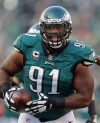 do collapse the pocket from the inside, creating openings on the outside. Their value was recognized in the 2012 draft when 23 defensive tackles were selected. All 23 played in the NFL, including the six seventh-rounders. Five of the 23 went to Pro Bowls: first-rounders Dontari Poe (Kansas City) and Fletcher Cox (Philadelphia), third-rounder Akiem Hicks (New Orleans), fourth-rounder Mike Daniels (Green Bay) and fifth-rounder Malik Jackson (Denver). Eighteen started games and 17 collected sacks. Cox was the crown jewel of the class, playing 12 seasons, starting 182 games, collecting 70 sacks and going to six Pro Bowls. He was named to the NFL’s 2010s all-decade team and won a Super Bowl with the Eagles. Cox retired after the 2023 season. Poe, Hicks and Wolfe joined Cox in the 100-start club.
2013
Jordan Poyer is a portrait of both perseverance and resilience. A cornerback, he led the Pac-12 in interceptions each of his final two seasons at Oregon State, picking off four passes in 2011 and seven in 2012. The Philadelphia Eagles drafted him in the seventh round in 2013 but he played sparingly at corner before getting cut in October. The Cleveland Browns claimed him on waivers and immediately moved him to strong safety. He sat on the bench his first two seasons in Cleveland before getting four starts at free safety in 2015 as an injury replacement for Tashaun Gipson. When Gipson left in free agency in 2016, Poyer won the starting free-safety spot but his season ended in the sixth game when he suffered a lacerated kidney. Buffalo signed him in free agency in 2017 and the Bills moved him back to strong safety. Poyer started all but five games there over the next seven seasons, intercepting 22 passes and earning a Pro Bowl invitation in 2022. He left for Miami in free agency in 2023 and started all 16 games for the Dolphins at free safety, then returned to the Bills and strong safety in 2025. Thirteen seasons with four teams at three different positions.
2014
Pitt might not have the quantity of Notre Dame, Ohio State and Southern Cal as an NFL talent supplier but the quality is certainly there. The St. Louis Rams drafted Pitt defensive tackle Aaron Donald with the 13th overall pick of the 2014 draft. He played 10 seasons and was voted to the Pro Bowl in all of them. Donald became a three-time NFL Defensive Player of the Year and a member of the league’s 2010s all-decade team. He set a record for sacks by a defensive tackle in a single season with 20 ½ in 2018 and retired with 111 in his career. He becomes eligible for the Hall of Fame in 2029 and looms as a first-ballot selection. That would give Pitt a Hall of Famer at 11 different positions, also quarterback (Dan Marino), running back (Tony Dorsett, Curtis Martin), wide receiver (Larry Fitzgerald), tight end (Mike Ditka) offensive tackle (Jim Covert), guard (Russ Grimm), defensive end (Chris Doleman), outside linebacker (Rickey Jackson), middle linebacker (Joe Schmidt) and cornerback (Darrelle Revis).
2015
The value of a franchise quarterback has long been established. Whether they come at the top of the first round (John Elway) or the bottom of the seventh round (Brock Purdy), NFL teams need them to succeed. So every team in every draft is looking for a quarterback, either to become the starter, to serve as the backup or as a developmental project. You never want to be caught short at the position. Teams looked once again in 2015 but didn’t find many. There were a record-low seven drafted that year. Quarterbacks were tabbed with the first two overall picks – Jameis Winston by Tampa Bay and Marcus Mariota but Tennessee – but the draft then wound through 72 more picks before a third quarterback was taken in the third round, Colorado State’s Garrett Grayson by New Orleans. Oregon State’s Sean Mannion was selected later in the same round by the Rams. Baylor’s Bryce Petty then went in the fourth round, UCLA’s Brett Hundley in the fifth and Northwestern’s Trevor Siemian in the seventh. Winston went to the Pro Bowl as a rookie and started for the Bucs for five seasons. But he has spent his last six seasons as a backup with three teams. Mariota also started his first five years with the Titans but has played for four different teams over the last six seasons. Grayson never took a snap in the NFL, Petty started seven games, Hundley nine and Siemian 33. All the non-first round QBs from 2015 are now out of the league.
2016
The NFL has made a strong push to grow the sport internationally. Since 1990, the NFL has sent teams to Australia, Brazil, Canada, England, Germany, Ireland, Japan, Mexico and Spain to play either exhibition or regular-season games. The first hint that the NFL has had an impact came in 2016 when the Minnesota drafted wide receiver Moritz Bohringer in the sixth round. He became the first European in NFL history drafted without playing college football. Bohringer played his amateur football for the Schwabisch Hall Unicorns of the German Football League, catching 59 passes for 1,232 yards and 13 touchdowns to capture Rookie of the Year honors in 2015. At 6-5, 227 pounds, Mohringer ran a 4.43 40-yard dash to put himself onto draft boards. But he never played a down in the NFL, spending the 2016 season on the Minnesota practice squad and both the 2018 and 2019 seasons on the Cincinnati Bengals practice squad.
2017
The Kansas City Chiefs showed the NFL the blueprint for a franchise quarterback. The Chicago Bears drafted Mitch Trubisky with the second overall pick of the 2017 draft, leaving Clemson’s national champion QB Deshaun Watson on the board. But the Chiefs traded up 17 spots in the first round to choose Patrick Mahomes with the 10th selection, two picks ahead of  Watson. There were questions and concerns about Mahomes. He rarely took snaps from center in Texas Tech’s Air Raid offense and played with a gunslinger mentality, often making plays on the run — a style conducive to turnovers. He threw 25 interceptions in his two seasons as the starter at Tech. But coach Andy Reid liked his arm and athleticism and did not rush Mahomes onto the field. He let him sit his rookie season, watch veteran Alex Smith and learn how to play the position. Too often NFL teams rush their first-round quarterbacks onto the field. Too often they are not ready for the speed of the NFL game and lack sufficient pass protection. And too often high picks like Trubisky, Tim Couch, David Carr, Sam Bradford, Blake Bortles, Josh Rosen and Zach Wilson have careers written off as disappointments. When Mahomes took over as the Kansas City quarterback in 2018, he was as ready mentally for the challenge as he was physically. He took the Chiefs to seven consecutive AFC title games and five Super Bowls, winning three of them. He has gone to six Pro Bowls and been a two-time NFL MVP. Sometimes it better to sit a young quarterback and let him watch. Joe Montana, Brett Favre, Tom Brady, Drew Brees and Aaron Rodgers all spent their rookie seasons on the bench yet all are either in the Hall of Fame or soon to have their tickets punched.
2018
There have been several sets of brothers in the NFL’s common-draft era who were both selected in the first round. But only the Edmunds brothers of Virginia Tech were both selected in the first round of the same draft. The Buffalo Bills chose linebacker Tremaine Edmunds with the 16th overall pick of the 2018 draft and the Pittsburgh Steelers claimed safety Terrell Edmunds with the 28th choice. Tremaine has started all 119 games of his eight-year career and is a two-time Pro Bowler with 14 career interceptions. Terrell started 75 games for the Steelers over his first five seasons but has started only four games over the last three years with five different teams. Other notable sets of first-round brothers include Clay (1978) and Bruce (1983) Matthews, Peyton (1998) and Eli (2004) Manning, Marcus (2003) and Desmond (2013) Trufant, Maurkice (2010) and Mike (2011) Pouncey, J.J. (2011) and T.J. (2017) Watt and Joey (2016) and Nick (2019) Bosa.
2019
There were only two 5,000-yard passing seasons in the NFL’s first 91 years through 2010. But there were nine such seasons by six different quarterbacks from 2011-2018. The NFL became an aerial show in the decade with teams loading up on elite wide receivers to maximize those quarterback arms. Unfortunately, cornerbacks have not kept pace in the bid to cover the likes of Calvin Johnson, Larry Fitzgerald, Andre Johnson and Julio Jones. In 2019, NFL teams drafted more cornerbacks than any other position – 32. Only three of the 32 did not make the NFL – but 11 who did failed to intercept a pass. Another 11 of the corners managed five interceptions or fewer. Only two of the 32 have been voted to a Pro Bowl, second-rounder Byron Murphy and fourth-rounder Julian Love. The 2019 draft was not a particularly strong one for wide receivers. The first one didn’t go until the 25th overall selection of the first round, Marquise Brown to Baltimore, and there were only 28 taken in the draft. But seven of the 28 have since gone to Pro Bowls, including D.K. Metcalf, Terry McLaurin, A.J. Brown and Deebo Samuel. Cornerbacks are losing the battle to stay competitive.
2020
There have been five centers enshrined in the Hall of Fame since the implementation of the common draft and not a one was a first rounder. Dwight Stephenson, Dermontti Dawson and Kevin Mawae were all second rounders, Mike Webster a fifth and Jim Langer an undrafted college free agent. If you need a center, you don’t need to take one in the first round. You can find them throughout the draft. The Dallas Cowboys selected center Tyler Biadasz in the fourth round of the 2020 draft and he became Pro Bowler. Other Pro Bowl centers drafted in later rounds include Jeff Van Note (11th round, 1969), Jeff Christy (fourth, 1992), Tom Nalen (seventh, 1994), Matt Birk (sixth, 1998), Jason Kelce (sixth, 2011) and Corey Linsley (fifth, 2014). Kelce went to seven Pro Bowls, Birk and Van Note six apiece, Nalen five, Christy three and Linsley one.
2021
The Kansas City Chiefs put the historically black college and universities (HBCU) on the map in 1963 when they selected Grambling DT Buck Buchanan with the first overall pick of the AFL draft. That opened the eyes of pro football to the talent at those schools. Buchanan went on to earn a bust in the Hall of Fame and was named to the NFL’s Centennial Team as one of the league’s 100 greatest players. And he wasn’t alone. There are now 35 players from the HBCU in the Hall of Fame, including 10 members of that 100th anniversary team: Buchanan, Mel Blount, Rosey Brown, Willie Brown, Ken Houston, Deacon Jones, Willie Lanier, Jerry Rice, Walter Payton and Art Shell. Sometimes the HBCU flow in drafts was intense – three first-round picks in both 1970 and 1971 – and sometimes it was just a trickle. But the HBCU always had a presence – until 2021. That marked the first draft since 1949 that the HBCU did not produce a single player worthy of an NFL draft choice, ending a streak of 72 consecutive years.
2022
The 2021 Georgia Bulldogs went 14-1 on the way to a national championship. So talented were the Bulldogs that they set a record with 15 players selected in the 2022 draft. Defensive end Travon Walker went first overall to Jacksonville and was joined in the first round by DT Jordan Davis (Philadelphia), LB Quay Walker and DT Devonte Wyatt (both by Green Bay) and safety Lewis Cline (Minnesota). WR George Pickens went to Pittsburgh in the second round as did RB James Cook to Buffalo. LBs Nakobe Dean went to Philadelphia and Channing Tindall to Miami in the third round. Las Vegas claimed RB Zamir White and Tampa Bay punter Jake Camarda in the fourth round. The sixth round produced the final four Georgia selections: guards Justin Shaffer (Atlanta) and Jamaree Salyer (LA Chargers), CB Derion Kendrick (LA Rams) and TE John FitzPatrick (Atlanta). But as talented as that group was in college, only two of those Bulldogs have gone to the Pro Bowl, second-rounders Pickens and Cook.
2023
The Detroit Lions made Sam LaPorta the 34th overall pick in the second round of the 2023 NFL draft. It was the safest pick of that draft. LaPorta played tight end at Iowa – and Iowa tight ends play in the NFL. There have been 16 tight ends drafted by the NFL out of Iowa since 1958. All but one made their drafting teams. Of the remaining 15, all but one caught a pass in the NFL — and all but two caught a touchdown pass. Dallas Clark and T.J. Hockenson both won the Mackey Award as the best college tight end in the nation at Iowa. Both became first-round NFL draft picks and Pro Bowlers. Six of those Iowa tight ends have gone to Pro Bowls: George Kittle (2017, San Francisco, fifth round) seven times, Jim Gibbons (1958, Detroit, sixth round) three, Marv Cook (1989, New England, third round) and Hockenson (2019, Detroit) two apiece and Clark (2003, Indianapolis) and LaPorta one each. Those 15 Iowa tight ends have combined to play 97 seasons in the NFL, catching 3,369 passes for 38,048 yards and 258 touchdowns.
2024
The 2024 draft was a rarity in that Heisman Trophy winners were selected with the first two choices. That’s because Caleb Williams won the award at Southern Cal in 2022 and Jayden Daniels at LSU in 2023. The Chicago Bears chose Williams first overall and the Washington Commanders took Daniels second. It was the second Heisman Trophy winner selected by each franchise in the common-draft era. Washington previously took Michigan WR Desmond Howard in 1991 and Chicago Colorado RB Rashaan Salaam in 1994. In all, 25 NFL franchises have chosen a Heisman Trophy winner in the common-draft era. Of the seven that have not, four franchises — the Colts (Alan Ameche), Chiefs (Mike Garrett), Jets (John Huarte) and Steelers (Johnny Lattner) — drafted Heisman winners prior to the common draft. That leaves expansion franchises Houston, Miami and Seattle as the only teams still without a Heisman winner in their draft histories. The Rams have drafted an NFL-high five Heisman winners in the common-draft era, followed by the Raiders and Saints with four apiece. The Raiders are likely to join the Rams at five with the selection of Indiana QB Fernando Mendoza with the first overall pick in 2026. The Raiders have previously drafted Marcus Allen (1982), Bo Jackson (1987), Tim Brown (1988) and Charles Woodson (1998).
2025
When the Indianapolis Colts found QB Riley Leonard in the sixth round in 2025, that pushed Notre Dame’s draft count to 538 players, the most of any college in history. Southern Cal is next with 533 selections, followed by Ohio State with 503, Michigan 422, Oklahoma 419 and Alabama 418. Notre Dame started its count with RB Bill Shakespeare, the third overall pick of the very first NFL draft in 1936 by the Pittsburgh Pirates. Ten of those Notre Dame selections are now in the Hall of Fame: RB Jerome Bettis, WR Tim Brown, LB Nick Buoniconti, TE Dave Casper, OT George Conner, HB Paul Hornung, End Wayne Millner, QB Joe Montana, DT Alan Page and DT Bryant Young.
2026
Alabama takes a record streak of 17 consecutive drafts with a first-round choice into 2026. The run started in 2009 when the Cincinnati Bengals selected OT Andre Smith with the sixth pick. During those 17 drafts, the Crimson Tide have produced 49 first-rounders. Alabama had six in 2021 and multi-first rounders in 14 other drafts. But only once has the Crimson Tide been honored with the first overall choice of a draft during that span – quarterback Bryce Young, who was selected by Carolina in 2023. Incredibly, he was only the second Alabama player to go first overall and the first since 1947 when the Washington Redskins tapped another quarterback, Harry Gilmer.
(Photo credits: Pete Rozelle, Kirk Gibson (Michigan State University), Don Shula (Miami Dolphins), Randy White, Jimmy Johnson (Dallas Cowboys), Warren Moon (Tennessee Titans), Jerry Rice, Frank Gore (San Francisco 49ers), Bo Jackson (Las Vegas Raiders), Barry Sanders (Detroit Lions), Rocket Ismail (University of Notre Dame), Charlie Ward (Florida State University), Ray Lewis (Baltimore Ravens), Peyton Manning (Indianapolis Colts), Drew Brees (New Orleans Saints), Troy Polamalu (Pittsburgh Steelers), Matthew Stafford (Los Angeles Rams), Fletcher Cox (Philadelphia Eagles), Patrick Mahomes (Kansas City Chiefs), Bill Belichick, Donald Driver, Caleb Williams (Wikipedia Commons).

Điều mình ưng ý nhất ở New88 chính là cái giao diện rất chuyên nghiệp. Màu sắc trung tính, không bị quá chói mắt khi chơi lâu vào ban đêm. Các danh mục trò chơi từ Thể thao, Casino đến Bắn cá được sắp xếp rất logic, nên dù là người mới như mình cũng chỉ mất vài phút là làm quen được hết. App chạy khá mượt trên điện thoại, ít khi gặp tình trạng giật lag hay văng game giữa chừng.
vfc7dr
Đăng ký OK9 ngay hôm nay, nhận liền 69K trải nghiệm game cực chất!
I like how you presented both sides of the argument fairly.